
SEAGULL HEALTH
Your health,We care!
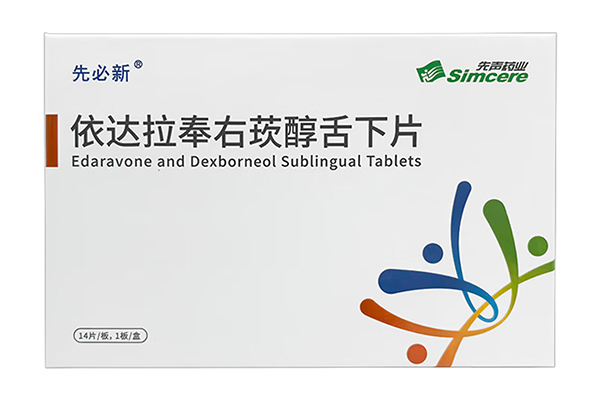
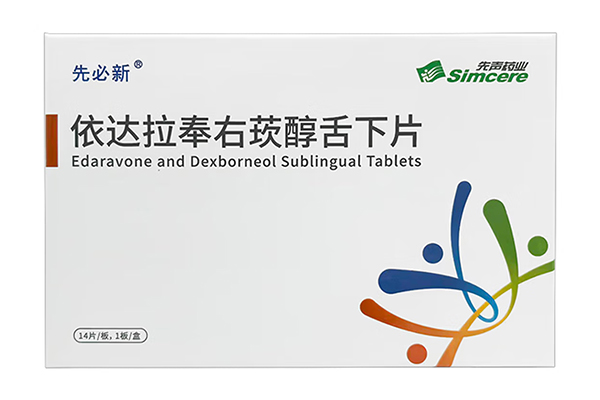
It provides a convenient and effective new option for the full-course treatment of acute ischemic stroke from the acute phase to the recovery phase, and also offer high-quality evidence-based support for clinical cerebral cell protection.

 AuthenticGuaranteeFast DeliveryPrivacy
 Edaravone Dexborneol Sublingual Tablets is the world's first compound neuroprotective innovative drug in the stroke field developed by Simcere Pharmaceutical Group, which has been granted the Breakthrough Therapy Designation by the U.S. Food and Drug Administration (FDA).
It is indicated for improving neurological symptoms, activities of daily living ability and functional impairments caused by acute ischemic stroke.
The recommended dosage is 1 tablet per dose, administered sublingually twice daily. The interval between two doses should be no less than 6 hours, with continuous administration for 14 days. Medication should be initiated as early as possible after the onset of illness.
Take out the tablet and place it under the tongue for sublingual administration (as shown in the figure below), and keep it there until no obvious foreign body sensation is felt. Do not chew or directly swallow the undisintegrated tablet during administration. A small amount of residual particles may remain after the tablet disintegrates sublingually; these are residual excipients and are a normal phenomenon.
This product is contraindicated in patients with severe renal insufficiency (as it may aggravate renal impairment).
This product is contraindicated in patients with hypersensitivity to the active ingredients or any of the excipients of this product.
Clinical trial data showed (a total of 1,194 patients with acute stroke were enrolled, among whom 599 received at least one dose of treatment) that the overall incidence of adverse reactions with this drug was 21.3%. Common adverse reactions included:
Abnormal liver function: Elevated aspartate aminotransferase (3.0%), elevated alanine aminotransferase (2.77%).
Electrolyte disturbance: Hypokalemia (1.66%).
Other adverse reactions with an incidence of 0.1%–1% involved multiple systems:
Metabolic abnormalities: Hyperuricemia, hypocalcemia, gout, etc. (total incidence 3.0%).
Cardiac discomfort: Palpitations, arrhythmia, etc. (1.2%).
Skin disorders: Rash, pruritus, etc. (1.0%).
Gastrointestinal symptoms: Constipation, abdominal pain, etc. (0.8%).
Respiratory system disorders: Cough, dyspnea (0.7%).
Nervous system disorders: Headache, dizziness (0.5%).
The incidence of abnormal laboratory test results was 6.8%, involving multiple parameters such as liver function indicators (elevated transaminase), renal function indicators (elevated serum creatinine) and blood lipid disorders. These reactions may be related to individual differences, dosage and other factors. During the medication period, close monitoring of vital signs such as blood pressure and heart rate is required. If any abnormality is detected, the medical staff should be informed immediately.
This product is contraindicated in pregnant women or women of childbearing potential.
Adequate studies have not been conducted in pregnant women, and the safety of administration during pregnancy cannot be confirmed. Animal reproductive toxicity experiments showed that at doses of 6.25–25 mg/kg/day (when the maximum exposure was 2.9 times the exposure of patients at clinical doses), no significant embryo-fetal developmental toxicity or obvious teratogenic effects were observed.
This product is contraindicated in lactating women. If administration is absolutely necessary, breastfeeding should be discontinued during the course of treatment with this product. Animal experiments have demonstrated that edaravone is distributed in breast milk.
This product should not be used in children (due to the lack of usage experience, the safety of pediatric administration cannot be confirmed).
In the clinical study of Edaravone Dexborneol Sublingual Tablets, a total of 179 elderly patients aged 65 years and above were included in the trial group. Overall, no significant differences in safety and efficacy were observed compared with the placebo group. Due to the decline of physiological functions in the elderly, appropriate management should be taken when adverse reactions occur, and administration should be discontinued if necessary.
Safety data in elderly patients aged 80 years and above are still lacking. This product should be used with caution in elderly patients aged 80 years and above.
For more detailed drug information, please consult the official package leaflet.
If any issues arise, please contact us immediately.
Email:haiousales@gmail.com
Copyright 2024 @ haiouhealth.com All right reserved SEAGULL HEALTH


